We are back in our homes. I want to thank you for the work you did to organize our trip and that it has been very satisfactory. The yoga towel was great for our morning practices. All the services, hotels, dinners have been more than correct. We will keep in touch for future occasions
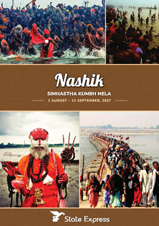
NASHIK SIMHASTHA KUMBH MELA 2027
There is no better occasion to visit India than during the Kumbh Mela, the greatest of Indian festivals and the largest gathering of people anywhere on earth.
The Nashik–Trimbakeshwar Simhastha is one of the four principal Kumbh Melas of India. Millions of devotees assemble on the banks of the holy Godavari, revered as the Ganga of the Deccan, to wash away their sins.
The festival is a once-in-a-lifetime experience for every visitor curious about Hindu religion and philosophy. The air rings with temple bells and the chanting of Vedic hymns, and the Naga Sadhus and akharas move in procession on camels and elephants, in gold and silver chariots drawn by their own devotees. For those seeking spirituality, it is a place of the divine, with the spiritual gurus of India all around. For the photographer, it offers moods, attire and faith found nowhere else.
WHEN THE SIMHASTHA IS HELD
Kumbh Mela comes at the time when Sun, Jupiter and Moon are at specific position on the Hindu Sidereal zodiac.
KUMBH LEGEND
According to Hindu mythology, during the Samudra Manthan, the churning of the ocean, drops of the divine nectar, amrit, fell at four sacred places: Prayagraj, Haridwar, Ujjain and Nashik. A dip in these waters at the time of the Mela is believed to bring moksha, release from the cycle of birth and rebirth.
THE AKHARAS
The akharas are the monastic orders of Hindu India: ascetic brotherhoods, some of them nine centuries old, who lead the Kumbh Mela. The Simhastha is held at two places about thirty kilometres apart. At Ramkund, the ancient ghat on the Godavari in Nashik city, the Vaishnava akharas bathe. At Kushavarta Kund, beside the Trimbakeshwar temple where the Godavari rises, the Shaiva akharas bathe.
Shaiva akharas (Kushavarta Kund, Trimbakeshwar): Juna, Niranjani, Mahanirvani, Atal, Agni, Avahan and Anand Akharas.
Vaishnava and associated akharas (Ramkund, Nashik): Nirvani Ani, Digambar Ani, Nirmohi Ani, Bada Udasin, Naya Udasin and Nirmal Akharas.
The exact procession order, bathing order and site allocation of individual akharas may be finalised by the Kumbh authorities and akhara representatives closer to the event.
RITUALS AND EXPERIENCES
AMRIT SNAN
Also known as the Shahi Snan or Royal Bath, this is the centrepiece of the Kumbh. Akhara heads and saints lead processions to the bathing ghats, followed by the general pilgrims.
AKHARA PROCESSIONS
Grand processions of the traditional monastic orders towards the bathing ghats, carrying centuries-old religious traditions.
KALPAVAS
A month-long spiritual practice of meditation, fasting, prayer, austerity and dawn bathing in the sacred river.
PIND DAAN AND ANCESTRAL RITES
Nashik is an important destination for ancestral rituals. Pilgrims may combine their Kumbh visit with Pind Daan ceremonies, guided by priests at the ghats.
GODAVARI AARTI
The evening aarti at Ramkund, generally between 6.30 pm and 7.30 pm, depending on the time of sunset.
If you have designed your own tour or have your particular requirement, please send us your query at info@statexp.in to send you our best rate and all information that you may need.